What is depyrogenation
Depyrogenation is the process of removing or inactivating pyrogens—primarily heat-stable endotoxins (lipopolysaccharides, or LPS) from the outer cell wall of Gram-negative bacteria—from glassware, packaging, equipment, and solutions. In Quality Control (QC) microbiology laboratories, maintaining depyrogenated materials is critical to prevent false positives during Bacterial Endotoxin Testing (BET) and to ensure parenteral pharmaceutical products meet regulatory safety standards.
Depyrogenation methods in QC labs
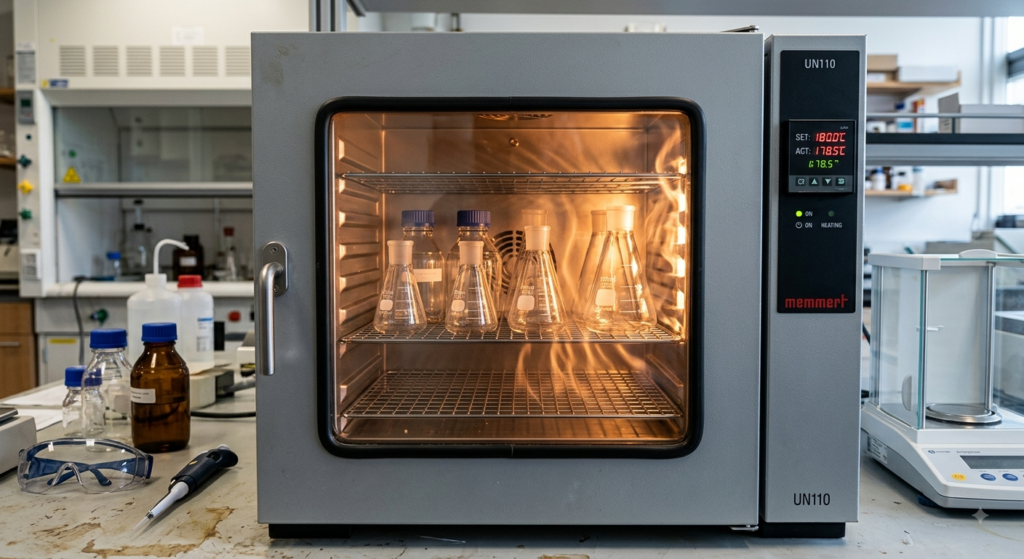
Dry Heat Depyrogenation: The most reliable method for heat-resistant items like glass vials, beaker materials, and stainless steel tools.
Hot Air Oven: Typically operated at 250°C for at least 30–60 minutes or 180°C for 3–4 hours.
Depyrogenation Tunnel: A continuous laminar-flow system used on aseptic filling lines to process glass containers prior to filling.
Chemical Treatment: Applied to heat-sensitive materials (such as certain plastics or resins) using strong oxidizing agents, 0.1 N Sodium Hydroxide (NaOH), or dilute acids.
Rinsing & Ultrafiltration: Involves high-velocity rinsing with Water for Injection (WFI) or passing liquid formulations through charge-modified, tangential-flow ultrafiltration membranes (10\text{–}100\text{ kDa} cut-off) to exclude LPS aggregates