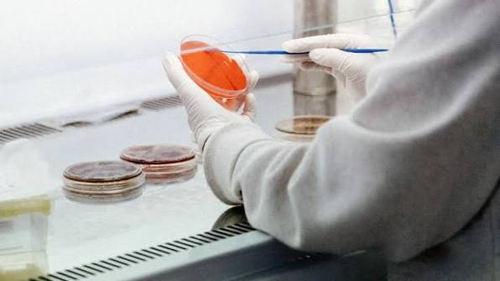

Hands should never pass over open culture plates because human skin and clothing constantly shed microscopic particles, dust, skin flakes, and bacteria that fall downward into the agar, ruining the sample.
Maintaining proper Sterile Technique requires keeping your hands and arms entirely away from the vertical air space directly above any exposed growth medium.
Risks of Passing Hands Overhead
- Shedding Contaminants: Skin flakes, hair fragments, and oils drop off hands and forearms, carrying environmental and resident microbes directly onto the nutrient agar.
- Disrupting Airflow: Reaching from above disturbs sterile updrafts (such as those created by a Bunsen burner) or laminar flow hoods, pulling unfiltered room air downward.
- Compromising Results: Unwanted airborne or skin bacteria outcompete target organisms, leading to ruined experiments and invalid data.
Best Practices for Handling Plates
- Work from the Side: Always move, open, and inoculate plates by reaching in from the sides rather than hovering over the top.
- Minimize Exposure Time: Keep petri dish lids tilted or closed whenever you are not actively transferring samples.
- Organize the Workspace: Arrange your tools and flame so your hands do not need to cross paths over open media.
What Happens When Your Hand Passes Over an Open Plate?
When a hand moves over an open culture plate, it can interrupt the airflow reaching the exposed medium.
At the same time, personnel can release:
- Skin particles
- Fibres
- Microorganisms
- Particles from gloves or garments
The hand can therefore become a physical barrier between the HEPA-filtered airflow and the exposed culture medium.
This creates an opportunity for contamination.
Never passing hands over open culture plates is not simply a laboratory habit—it is an important part of aseptic technique and contamination control.
Hands can generate particles, and their movement can interrupt the clean airflow intended to protect exposed culture media.
By planning movements, protecting first air, minimizing unnecessary activity, and following approved SOPs, microbiologists can reduce contamination risks and improve the reliability of their work.
In aseptic microbiology, the best movement is often the one that never crosses the critical zone.