What is calibration
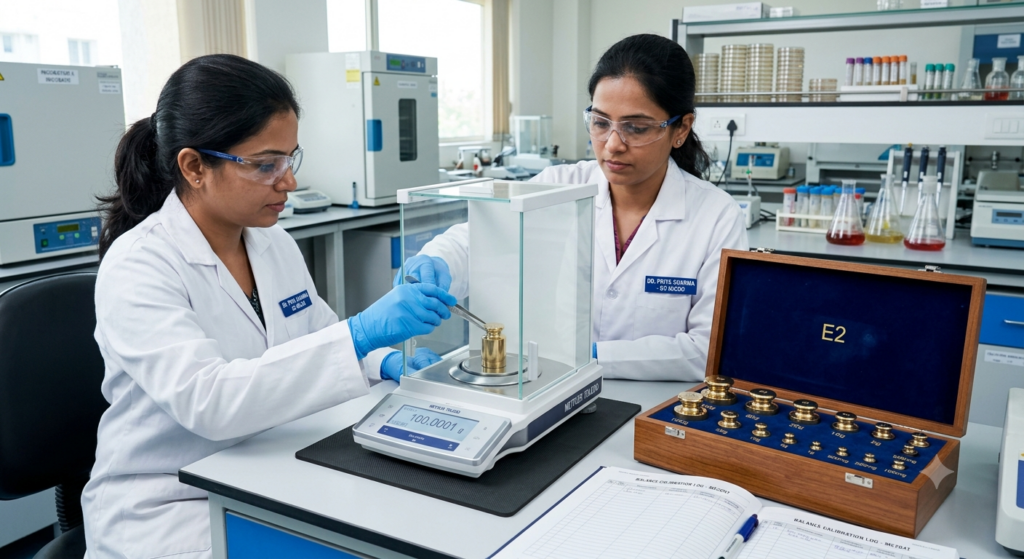
Calibration of instruments in a microbiology laboratory is the documented process of comparing an instrument’s measurements against a known, certified reference standard (traceable to national or international standards like NIST or ISO) to verify its accuracy and precision. If the instrument’s readings drift outside acceptable tolerance limits, it is adjusted or corrected to align with the standard.
Why calibration is important
Sterilization Assurance: An uncalibrated autoclave thermometer might display 121°C when the internal temperature is only 116°C, failing to kill bacterial spores (Geobacillus stearothermophilus) and contaminating media batches.
Accurate Enumeration: Inaccurate micropipettes skew serial dilutions exponentially, resulting in incorrect Colony Forming Unit (CFU/mL) calculations in water, food, or pharmaceutical testing.
Optimal Growth Conditions: Organisms require precise incubation temperatures; a shift of even ±1°C can inhibit fastidious pathogens or favor fast-growing contaminants.
Regulatory Compliance: Audits under ISO/IEC 17025, Good Laboratory Practice (GLP), and cGMP require full traceability of all analytical measurements.