
Process Capability (Cₚ and 𝐂ₚ𝐊) is vital in pharmaceuticals because it provides numerical proof that manufacturing steps like tablet compression or active ingredient mixing consistently produce safe, effective medicine within strict regulatory limits, preventing costly batch failures and patient risk.
𝐖𝐡𝐲 (𝐂ₚ 𝐚𝐧𝐝 𝐂ₚ𝐊) 𝐌𝐚𝐭𝐭𝐞𝐫
- 𝐆𝐮𝐚𝐫𝐚𝐧𝐭𝐞𝐞𝐬 𝐐𝐮𝐚𝐥𝐢𝐭𝐲: Compares process variation directly against upper and lower safety limits.
- 𝐌𝐞𝐞𝐭𝐬 𝐑𝐞𝐠𝐮𝐥𝐚𝐭𝐢𝐨𝐧𝐬: Supports FDA and ICH expectations for ongoing process validation and control.
- 𝐏𝐫𝐞𝐝𝐢𝐜𝐭𝐬 𝐏𝐫𝐨𝐛𝐥𝐞𝐦𝐬: Flags a drifting manufacturing line before it creates out-of-spec (OOS) drug products.
- 𝐂𝐮𝐭𝐬 𝐂𝐨𝐬𝐭𝐬: Reduces wasted materials, revalidations, and delayed product releases.
𝐃𝐢𝐟𝐟𝐞𝐫𝐞𝐧𝐜𝐞𝐬
- 𝐂ₚ (𝐏𝐨𝐭𝐞𝐧𝐭𝐢𝐚𝐥 𝐂𝐚𝐩𝐚𝐛𝐢𝐥𝐢𝐭𝐲): Measures total process spread assuming the average is perfectly centred; it shows how good the system could be.
- 𝐂ₚ𝐊 (𝐀𝐜𝐭𝐮𝐚𝐥 𝐂𝐚𝐩𝐚𝐛𝐢𝐥𝐢𝐭𝐲): Measures real performance by factoring in how much the process average drifts off-centre toward a failure limit.
In simple words:
Cp measures the potential capability of a process, while Cpk measures how well the process is actually performing in real production.
𝐁𝐞𝐧𝐞𝐟𝐢𝐭𝐬 𝐨𝐟 𝐌𝐨𝐧𝐢𝐭𝐨𝐫𝐢𝐧𝐠 𝐂𝐩 & 𝐂𝐩𝐤
Using Process Capability studies helps pharmaceutical companies:
- Enhancing Precision: The analysis of CP and CPK helps identify areas where the production process might deviate from specifications. In ICT, this ensures that testing equipment is calibrated to measure correctly and consistently.
- Reducing Defects: By bringing CPK closer to CP, manufacturers can reduce the likelihood of defects in electronic components, such as shorts or opens, which are commonly detected during in-circuit testing.
- Improving ROI: Optimizing processes using CP and CPK ensures fewer defective units are produced, reducing the need for retesting or reworking. This directly impacts the efficiency and cost-effectiveness of ICT.
Process Capability studies are commonly used during Process Validation, Continued Process Verification (CPV), and Continuous Improvement to demonstrate that manufacturing processes remain stable and capable over time.
A capable process reduces variability, improves product quality, and builds confidence in every batch produced.
𝐓𝐡𝐞 𝐌𝐚𝐭𝐡𝐞𝐦𝐚𝐭𝐢𝐜𝐚𝐥 𝐅𝐨𝐫𝐦𝐮𝐥𝐚𝐬
To calculate these metrics, you need the process average (μ), the standard deviation (σ), the Upper Specification Limit (USL), and the Lower Specification Limit (LSL).
- Potential Capability (𝐂𝐩):
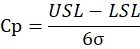
- What it means: This looks strictly at the spread. It ignores whether the process is centred.
- Actual Capability (𝐂ₚ𝐊)
- What it means: This shifts the focus to the closest specification limit. It penalizes the score if the process average drifts.