
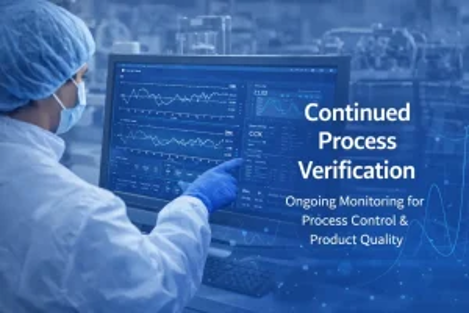
Continued Process Verification (CPV) is crucial because it ensures manufacturing processes consistently remain in a state of control throughout their commercial lifecycle.
By replacing retrospective batch reviews with continuous, real-time statistical monitoring, CPV allows manufacturers to detect process drift, prevent costly product failures, and maintain strict global regulatory compliance.
Importance of Continued Process Verification
Continued Process Verification is not just the final step in Process Validation; it is a dynamic and continuous activity that spans the entire lifecycle of the product. Its importance can be attributed to several factors:
- Maintaining Consistency and Control
- Identifying Trends and Variations
- Supporting Continuous Improvement
- Regulatory Compliance and Risk Management
- Ensuring Patient Safety
Why CPV Matters in Quality Compliance
CPV enables life sciences companies to:
- Maintain processes in a validated state
- Reduce batch failures and recalls
- Identify variability and trends before they become problems
- Ensure adherence to GxP and Regulatory guidelines
- Facilitate continual improvement and process optimization
The primary reasons CPV is essential include:
- Proactive Quality Assurance: Unlike traditional end-of-batch testing, CPV uses real-time data to identify subtle variations and trends (out-of-trend) before they result in a rejected batch or a critical deviation.
- Regulatory Compliance: CPV is a mandatory pillar of modern process validation lifecycles established by major regulatory bodies, including the FDA Process Validation Guidance and the International Council for Harmonisation.
- Significant Cost Savings: By preventing defects and optimizing process efficiency early, CPV helps eliminate expensive rework, material waste, and product recalls.
- Process Optimization: Advanced monitoring provides data insights that allow manufacturers to continuously improve yield, accelerate troubleshooting, and refine operations.
Five Steps to Successful Implementation of Continuous Process Verification:
- Define Critical Process Parameters (CPPs)
- Leverage Advanced Technologies
- Establish Data Management Protocols
- Integrate Continuous Process Verification into Quality Management Systems
- Train Personnel
Continued Process Verification provides the evidence that a validated process remains reliable, helping manufacturers deliver safe, effective, and high-quality medicines to patients.
Because in pharmaceuticals, quality isn’t achieved once—it’s maintained every single day.