
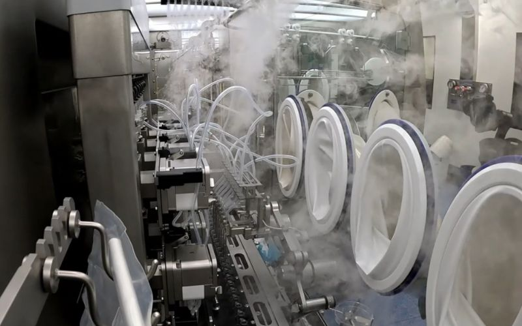
A smoke study is a critical airflow visualization technique used in sterile manufacturing to observe the invisible movement of air inside cleanrooms. It visually verifies that air is unidirectional, free of turbulence, and sweeps contaminants away from sterile products.
By introducing a visible, non-toxic smoke into the air, technicians can observe how air moves around equipment, personnel, and other potential obstructions.
This helps identify any areas where air may be stagnant or where there might be cross-contamination risks.
Typically, the smoke is generated using smoke sticks, smoke tubes, or specialized machines that produce a continuous stream of vapor. The study is often recorded on video to allow for detailed analysis and review
𝐓𝐡𝐞 𝐩𝐫𝐨𝐜𝐞𝐬𝐬 𝐨𝐟 𝐜𝐨𝐧𝐝𝐮𝐜𝐭𝐢𝐧𝐠 𝐚 𝐬𝐦𝐨𝐤𝐞 𝐬𝐭𝐮𝐝𝐲 𝐭𝐲𝐩𝐢𝐜𝐚𝐥𝐥𝐲 𝐢𝐧𝐯𝐨𝐥𝐯𝐞𝐬 𝐬𝐞𝐯𝐞𝐫𝐚𝐥 𝐤𝐞𝐲 𝐬𝐭𝐞𝐩𝐬:
- 𝐏𝐫𝐞𝐩𝐚𝐫𝐚𝐭𝐢𝐨𝐧: Ensure that all equipment is functioning correctly and that the environment is as close to typical operating conditions as possible.
- 𝐒𝐦𝐨𝐤𝐞 𝐆𝐞𝐧𝐞𝐫𝐚𝐭𝐢𝐨𝐧: Introduce a visible, non-toxic smoke into the environment using appropriate devices.
- 𝐎𝐛𝐬𝐞𝐫𝐯𝐚𝐭𝐢𝐨𝐧 𝐚𝐧𝐝 𝐑𝐞𝐜𝐨𝐫𝐝𝐢𝐧𝐠: Observe and record the movement of the smoke, paying close attention to critical areas such as workstations, equipment, and entry points.
- 𝐀𝐧𝐚𝐥𝐲𝐬𝐢𝐬: Analyse the recorded footage to identify any areas of concern. This may involve measuring the speed and direction of airflow and identifying any zones of turbulence or stagnation.
- 𝐑𝐞𝐩𝐨𝐫𝐭𝐢𝐧𝐠 𝐚𝐧𝐝 𝐀𝐜𝐭𝐢𝐨𝐧: Document the findings and, if necessary, make recommendations for changes to the environment or procedures to address any identified issues.
𝐒𝐦𝐨𝐤𝐞 𝐒𝐭𝐮𝐝𝐲 𝐀𝐧𝐚𝐥𝐲𝐬𝐢𝐬 𝐏𝐫𝐢𝐧𝐜𝐢𝐩𝐥𝐞𝐬 𝐚𝐧𝐝 𝐀𝐜𝐜𝐞𝐩𝐭𝐚𝐧𝐜𝐞 𝐂𝐫𝐢𝐭𝐞𝐫𝐢𝐚:
- Unidirectional airflow must remain visible at all locations
- No turbulence, disruption, or obstruction of airflow is permissible
- Complete air sweeps must occur from ISO 5 to lower grades
- Smoke dissipation from critical zones should occur rapidly within defined limits
- Interventions should not disturb first air movement in ISO 5 zones
- Aseptic practices must prevent viable particle entry into critical areas
𝐑𝐞𝐚𝐬𝐨𝐧𝐬 𝐖𝐡𝐲 𝐒𝐦𝐨𝐤𝐞 𝐒𝐭𝐮𝐝𝐢𝐞𝐬 𝐀𝐫𝐞 𝐄𝐬𝐬𝐞𝐧𝐭𝐢𝐚𝐥
- Verifying “First Air” Protection
- Visualizing Turbulence and Dead Zones
- Assessing Real-World Interventions
- Confirming Pressure Cascades and Containment
- Optimizing Equipment and Facility Design
- Personnel Training tool
In sterile manufacturing, you can’t protect what you can’t see.
Every successful Smoke Study is more than just an engineering exercise.
It is proof that the environment surrounding a sterile product is working to protect it.